All Categories
Featured
Preparing Toward New Commercial ESG Reporting Standards
Creating Aesthetic and Functional Municipal Landscapes

Why Switch Towards Eco-Friendly Business Grounds?
How to Scale Service Quality Via Regional Hubs?
Table of Contents
That matters, provided that the energy plants represent about half of the water utilized on campus in a common year.
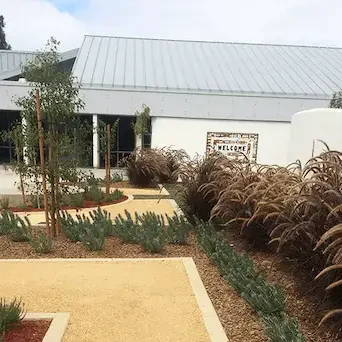
This site describes how to design and install California friendly landscaping, irrigation approaches and equipment that will help you water your landscape more efficiently, and suggestions on how to quickly and successfully keep your garden. Please click on Lawn to Garden for examples of gardens that contain design components that are turf refund eligible.
2004-2025 Jadene Mayla, All Rights Reserved.
"Sustainable landscapes are responsive to the environment, re-generative, and can actively contribute to the development of healthy communities. - From the American Society of Landscape Architects WE CAN DRAMATICALLY REDUCE YOUR LANDSCAPES WATER AND ENERGY USAGE, WHILE CREATING A MORE LUSH, BEAUTIFUL, AND ENVIRONMENTALLY SUSTAINABLE GARDEN AREA FOR YOU AND YOUR HOUSEHOLD TO ENJOY!
We use only the most effective water-saving and lighting innovation in our designs that need just a fraction of the water and energy that older systems use. CBL develop habitat for regional and migratory bird in addition to helpful insect populations. We mostly utilizes organic fertilizers and mulches in our styles and initiates non-toxic bug control programs for all our tasks.
Commercial Landscaping Los Angeles County
Adopting Water-Efficient Greenspace Across Orange County
It is our mission to produce outside areas that are beautiful and vibrant, that require little water and energy, are healthy and happy areas for our clients to enjoy, which also offer functional benefits to our local environment.
Commercial Landscaping Los Angeles CountyRaptors (e.g. hawks, owls, falcons) are large, charismatic bird species at the top of the food cycle. They experienced human-driven population crashes during the 19th and 20th centuries. While a subset of these species has recuperated in the Los Angeles region, others have not and are intolerant of urbanization and other human activities.
Nesting areas of raptors are also crucial indications of environment health in metropolitan locations like the Los Angeles region. A number of federal government agencies, developers and nonprofit companies collect information on urban-nesting raptors around the Los Angeles Basin, however these efforts are not well-coordinated. If this information can be consolidated, it will be useful to developing management tools like maps and databases that can help assist local policy and land-use choices.
Comprehensive water recycling, with 70-80% percent of stormwater overflow from around the website filtered through natural wetlands and mechanical systems, and after that utilized to water the surrounding parkland. 4,609,504 gallons of rainwater captured each year. Yearly carbon emissions decrease due to planting location of about 240,000 pounds of CO2 sequestered by trees on website 16.65 acres of overall planting location (5.4 acres at SoFi Stadium, 2.75 acres at Lake Park, and 7 acres of streetscape planting, to name a few 6-plus miles of new routes and paths (4.17 miles of enhanced direct streetscape consisting of sidewalks, 1.89 miles of brand-new multi-use tracks, and about 2,300 linear feet of brand-new Class II on-street bikeways) More details in the complete news release below: a near 300-acre sports and home entertainment location being developed by dealt with a landscape architecture and city design studio, to produce civic and ecologically mindful landscape solutions across three essential locations: water capture and reuse, the usage of one hundred percent Southern California-native plant species, and the continued advancement of public parks for year-round use.
Inspired by the initial water function that became part of the former Hollywood Park racetrack, Lake Park includes an upper and lower lake separated by cascading waterfalls. At around 6 acres and 16 million gallons of water, the lake is surrounded by an additional 6 acres of parkland. The lake operates as a water recycling system by gathering 70-80 percent of stormwater runoff from around the site, filtering it through natural wetlands and mechanical systems, and after that using it to water the surrounding parkland.
Adopting Water-Efficient Landscaping in Orange County
Extensive water recycling, with 70-80% percent of stormwater overflow from around the site infiltrated natural wetlands and mechanical systems, and then utilized to irrigate the surrounding parkland. 4,609,504 gallons of rainwater captured each year. Annual carbon emissions reduction due to planting location of about 240,000 pounds of CO2 sequestered by trees on site 16.65 acres of overall planting location (5.4 acres at SoFi Stadium, 2.75 acres at Lake Park, and 7 acres of streetscape planting, amongst others 6-plus miles of new tracks and paths (4.17 miles of enhanced direct streetscape including walkways, 1.89 miles of new multi-use tracks, and about 2,300 direct feet of brand-new Class II on-street bikeways) More details in the complete press release listed below: a near 300-acre sports and home entertainment location being developed by worked with a landscape architecture and urban design studio, to create civic and environmentally mindful landscape options throughout three key locations: water capture and reuse, the utilization of 100 percent Southern California-native plant types, and the ongoing advancement of public parks for year-round use.
Influenced by the initial water function that became part of the previous Hollywood Park racetrack, Lake Park consists of an upper and lower lake separated by cascading waterfalls. At roughly 6 acres and 16 million gallons of water, the lake is surrounded by an extra 6 acres of parkland. The lake works as a water recycling system by gathering 70-80 percent of stormwater runoff from around the website, filtering it through natural wetlands and mechanical systems, and after that using it to irrigate the surrounding parkland.

Latest Posts
Preparing Toward New Commercial ESG Reporting Standards

Creating Aesthetic and Functional Municipal Landscapes

Expert Methods of Southern California Grounds Sustainability